Mass vs weight in gemmology: why “1 carat” is a mass
At GGTL Laboratories, we are often asked why our reports state "Mass: 1.00 carat" while other laboratories use "Weight: 1.00 carat".
The reason is that there is a fundamental difference between "weight" and "mass":
Weight refers to the gravitational (and inertial) force exerted by the Earth on any mass in its vicinity.
Its unit is the newton: 1 newton is the force required to give a mass of one kilogram an acceleration of 1 m s−2.
Weight depends on location (altitude, latitude), as the value of a given weight will vary depending on where it is measured on the planet.
It must also be adjusted for environmental effects (temperature, atmospheric pressure).
In industrial or scientific applications, the distinction between mass and weight is crucial.
This means that if "Weight:" is indicated, the value should be expressed in newtons.
Mass is a positive scalar physical quantity that characterises the amount of matter in a body.
It determines its inertia (resistance to changes in motion) and its gravitational interaction with other bodies.
Unlike weight, which varies with gravity, mass is an intrinsic property and remains constant regardless of position or environment.
It is expressed in the International System of Units (SI), where the unit of measurement is the kilogram (kg).
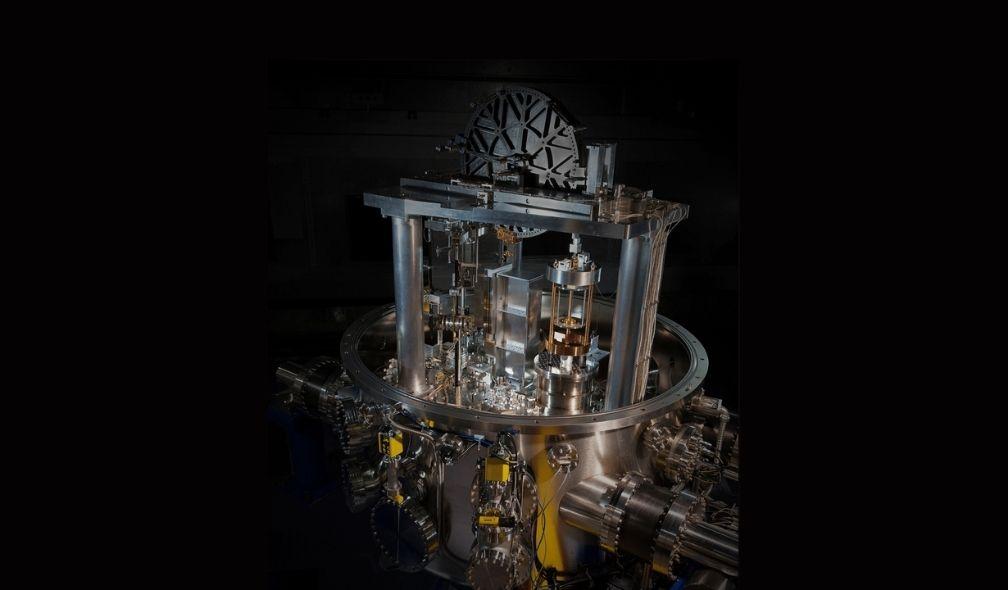
Since 2019, it has been defined using the Planck constant (h) via the Kibble balance, ensuring universal stability and reproducibility.
This means that if the unit "carat"—a metric unit originally defined in 1907 at the 4th General Conference on Weights and Measures and part of the International System of Units (of which 64 nations, including the USA, are members)—is to be used, the correct term is "Mass:".
To comply with international conventions, gemmological reports issued by laboratories following a scientific approach should therefore state "Mass: 1.00 carat" rather than "Weight: 1.00 carat".
For laboratories that still prefer to use "Weight:", the mass must be converted to newtons.
For a diamond with a mass of 1.00 carat, this would yield:
Weight: 0.001962 newton, calculated as F = 0.0002 kg × 9.81 m s−2 = 0.001962 N.